Gyeongbokgung Palace Guide: Changing Ceremony, Hanbok Free Entry, Hours
Use this Gyeongbokgung Palace guide for changing ceremony times, hanbok free entry, seasonal hours, Tuesday closure, subway exits, and English tours.
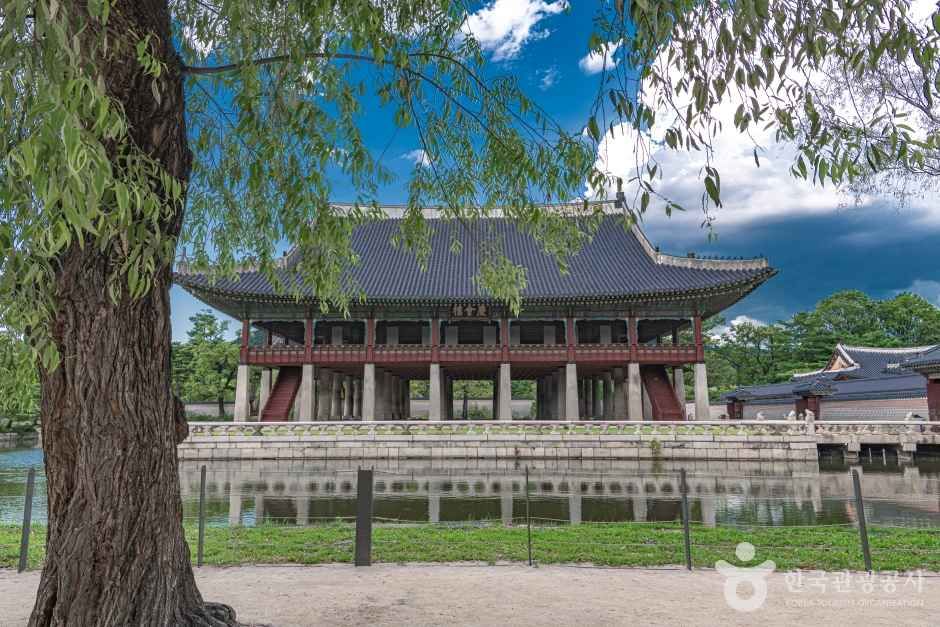
Do not just walk into Gyeongbokgung without a plan
Gyeongbokgung is Joseon’s main palace, built in 1395. Its name means something close to “may the new dynasty enjoy great fortune and prosper.”
For a first-time foreign visitor, though, timing matters more than a long history lesson. Do not show up on a Tuesday and find the gates closed. Do not rent a hanbok and still miss the free-entry rules. And if you want the palace to feel like a palace, build your visit around the Sumunjang Changing Ceremony.
The simplest plan is this: arrive at 09:00, watch the 09:35 Sumunjang public training, then stay for the 10:00 Royal Palace Sumunjang Changing Ceremony before exploring the palace grounds. If you miss the morning slot, use the 14:00 changing ceremony as your backup.
Gyeongbokgung basics at a glance
- Address: 161 Sajik-ro, Jongno-gu, Seoul
- Official palace website: royal.khs.go.kr
- Adult admission: 3,000 KRW
- Foreign adult admission: 3,000 KRW for ages 19–64
- Inquiries: +82-2-3700-3900
- Closed: Tuesday
- If Tuesday is a public holiday, the palace closes on the next business day
Opening hours change by season
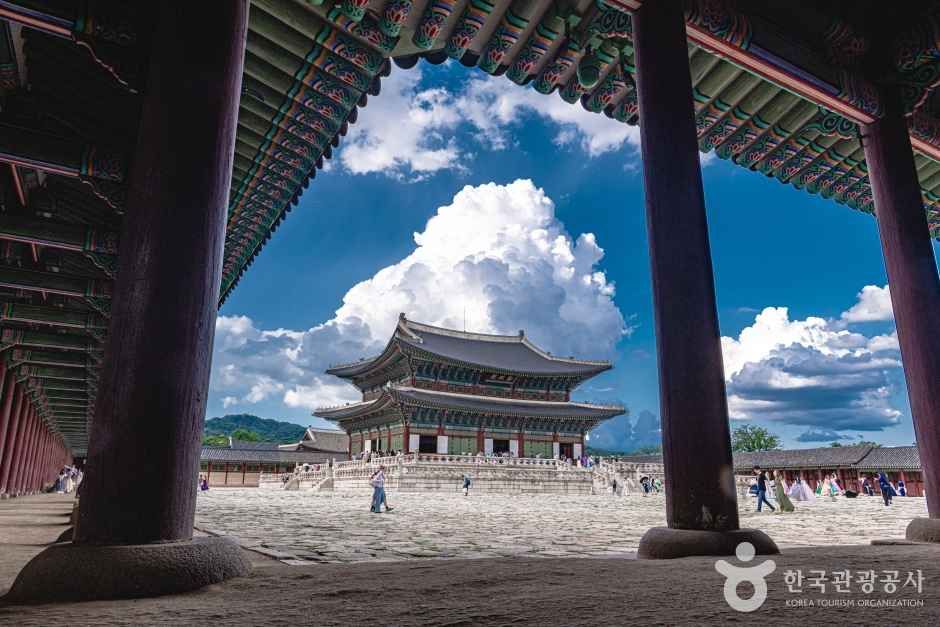 Photo: © 한국관광공사 (Korea Tourism Organization)
Gyeongbokgung’s hours change by season, and last admission is 1 hour before closing.
- November–February: 09:00–17:00, last admission 16:00
- March–May: 09:00–18:00, last admission 17:00
- June–August: 09:00–18:30, last admission 17:30
- September–October: 09:00–18:00, last admission 17:00
The Tuesday closure catches more travelers than you might expect. Check the official page once more before you go. For night openings or other seasonal campaigns, look for a separate official notice before building your plans around them.
Sumunjang Changing Ceremony: the best time to see the palace in motion
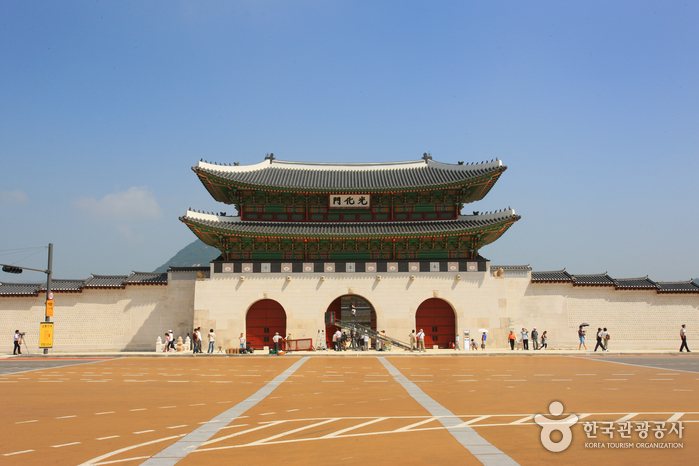 Photo: © 한국관광공사 (Korea Tourism Organization)
The Royal Palace Sumunjang Changing Ceremony reenacts the Joseon-era procedure for changing the palace gate guards. It takes place around Gyeongbokgung and Gwanghwamun, with costumes and weapons reproduced from historical records.
The main viewing area is around Heungnyemun Gate and Gwanghwamun. Watching the ceremony is free.
Regular event times
- Sumunjang public training: 09:35, 13:35 / 15 minutes
- Royal Palace Sumunjang Changing Ceremony: 10:00, 14:00 / 20 minutes
- Gwanghwamun Guard-on-Duty Ceremony: 11:00, 13:00 / 10 minutes
The ceremony may be canceled in rain, and schedules can change. If the changing ceremony is the reason for your visit, check the Korea Heritage Agency or VisitKorea event page again on the day.
On weekends and public holidays, there may be one more event
The Gyeongbokgung Sumunjang Patrol Ceremony runs on Saturdays, Sundays, and public holidays in March–May and September–November. The time is 15:00–16:00.
On Sundays and public holidays, the route may move inside Gyeongbokgung depending on road conditions caused by rallies or public events.
Hanbok free entry: a vague “hanbok look” is not enough
At Gyeongbokgung, wearing hanbok can qualify you for free admission. Visitors aged 18 and under, visitors aged 65 and over, and visitors on Culture Day, the last Wednesday of each month, are also included in the free-admission categories.
The hanbok rules are more specific than many people expect.
- Traditional hanbok and daily-life hanbok are both accepted
- The basic requirement is a jeogori plus a lower garment
- The lower garment must be a skirt or pants
- Wearing only a durumagi does not count as hanbok for free admission
- Part-hanbok combinations, such as jeogori + jeans or hanbok skirt/pants + T-shirt, do not qualify for free admission
If you plan to rent hanbok, ask whether it is a full set that qualifies for free palace entry. Some outfits look great in photos but still require you to pay the admission fee separately.
How to get there by subway
The easiest way to reach Gyeongbokgung is by subway.
- Line 3, Gyeongbokgung Station Exit 5: 216 m
- Line 5, Gwanghwamun Station Exit 2: 471 m
If you want to see the Sumunjang Changing Ceremony first, plan your route toward Heungnyemun and Gwanghwamun.
English guided tours and museums
English guided tours run every day except Tuesday at 11:00, 13:30, and 15:30.
- Fewer than 10 people: no reservation required
- 10 or more people: reservation required
- Maximum group size: 30 people
The National Palace Museum of Korea and the National Folk Museum of Korea are also on the Gyeongbokgung grounds. If you have time after the palace, it makes sense to visit one of them before leaving the area.
Recommended itinerary: first-timers should choose the morning route
Morning route
- 09:00 Arrive at Gyeongbokgung
- 09:35 Watch the Sumunjang public training
- 10:00 Watch the Royal Palace Sumunjang Changing Ceremony
- Afterward, explore Gyeongbokgung
- If you have time, visit the National Palace Museum of Korea or the National Folk Museum of Korea
Afternoon backup route
- 13:35 Watch the Sumunjang public training
- 14:00 Watch the Royal Palace Sumunjang Changing Ceremony
- Afterward, explore Gyeongbokgung
Morning is better because closing time and last admission change by season. In winter especially, the palace closes at 17:00 and last admission is 16:00.
Checklist before you go
- Check whether today is Tuesday
- Check the seasonal opening hours and last admission time
- Check the Sumunjang Changing Ceremony schedule and possible rain cancellation
- If you want free hanbok admission, make sure your outfit is jeogori + skirt or jeogori + pants
- If you want an English guided tour, plan around 11:00, 13:30, or 15:30
Gyeongbokgung really is one of the places worth visiting at least once in Seoul. It is just much better when you follow the timetable instead of simply showing up.