Winter Hiking in Korea: Crampons, Ice, Snow Trails, and Bus Return Planning
Winter hiking in Korea: when to use crampons or microspikes, when to turn back, and how to plan Seoraksan by bus without risky timing.
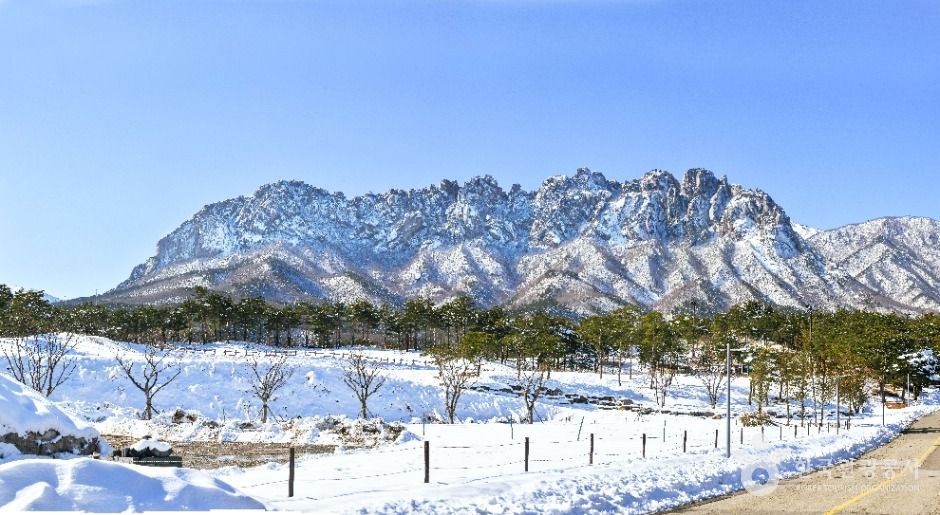
1. Who this winter hiking guide is for
This guide is for foreign hikers who want to plan winter hiking in Korea without a car. It helps you judge snow trails, ice, crampons or microspikes, and the public-transit return as one plan.
It is not an on-the-ground trip report. It is also not a live status page that promises whether Seoraksan is open on the day you go.
As of the 2026-07-15 check, Korea National Park Service describes the winter natural-disaster countermeasure period as November 15 to March 15. During that period, heavy snow and sudden temperature drops can increase the risk of isolation and safety accidents.
So KoreaPeak’s basic rule is not “bring crampons and go.” It is: go only when official controls, weather, trail surface, descent timing, and return transportation all work with a conservative margin.
1.1 KoreaPeak’s 30-second answer
For winter hiking in Korea, prepare hiking microspikes or chain-style crampons that fit the exact shoes you will wear on the trail.
But crampons are not a permit. They do not override official closures, worsening weather, strong wind, short daylight, or a steep frozen descent.
If snow starts falling, KNPS winter hiking guidance says to descend immediately or move to a nearby shelter.
Cold-wave guidance also says to prepare several thin layers and a spare battery. Winter gear does not stop at traction under your boots.
1.2 This guide is a good fit if…
Use this guide if you are planning your first Korean winter hike, or your first one in a long time, and you care more about getting down and getting home safely than reaching a famous summit.
It also fits hikers who are willing to base the day around Sokcho, or stay near the Sokcho terminal area, instead of trying to make a summit-focused round trip straight from Seoul.
The guide keeps official links and Korean place names together because foreign hikers often get stuck at exactly those points: trail-control pages, bus stops, weather pages, and Korean route names.
Do not save only big names like “Seoraksan” and “Ulsanbawi.” Also save the practical start and return points: Seoraksan Sogongwon, Sogongwon, Sokcho Express Bus Terminal, and Gosok Bus Terminal.
1.3 Lower the target or skip the hike if…
If you have never worn crampons before and would struggle if you lost balance on frozen stairs or a rocky descent, treat the Seoraksan example in this guide as decision practice, not as your target route.
Do not push ahead if several warning signs overlap: official controls, worsening snow, wind, poor visibility, heavy-snow, cold-wave or strong-wind advisories, course notes about steep slopes and strong wind, and winter surface conditions that feel beyond ordinary hiking. Choose another hike or go with a guide.
Famous does not mean beginner-friendly in winter. Gongnyongneungseon, Daecheongbong summit routes, and long one-night ridge routes should not be softened into winter alternatives for beginners.
The KNPS Seoraksan guide lists Gongnyongneungseon as a 19.1 km, 14-hour-40-minute one-way course. It also describes the route as very steep, with almost no flat ground and severe weather changes.
1.4 What this guide does not do
This guide does not treat official controls, worsening weather, steep slopes, strong wind, or winter trail surfaces as problems that an ordinary hiker can improvise around.
It does not say Ulsanbawi is currently open. Right before departure, check national-park control status, Seoraksan control detail, and national-park weather.
It does not promise exact first-bus or last-bus passing times at the Gosok Bus Terminal stop. The officially checked points here are the Sokcho BIS route map and the return timetable from the Seoraksan Sogongwon starting point.
It also does not promise that taxis are always waiting at Seoraksan Sogongwon. The basic safety plan is to return by buses 7 and 7-1.
2. How difficult is winter hiking in Korea?
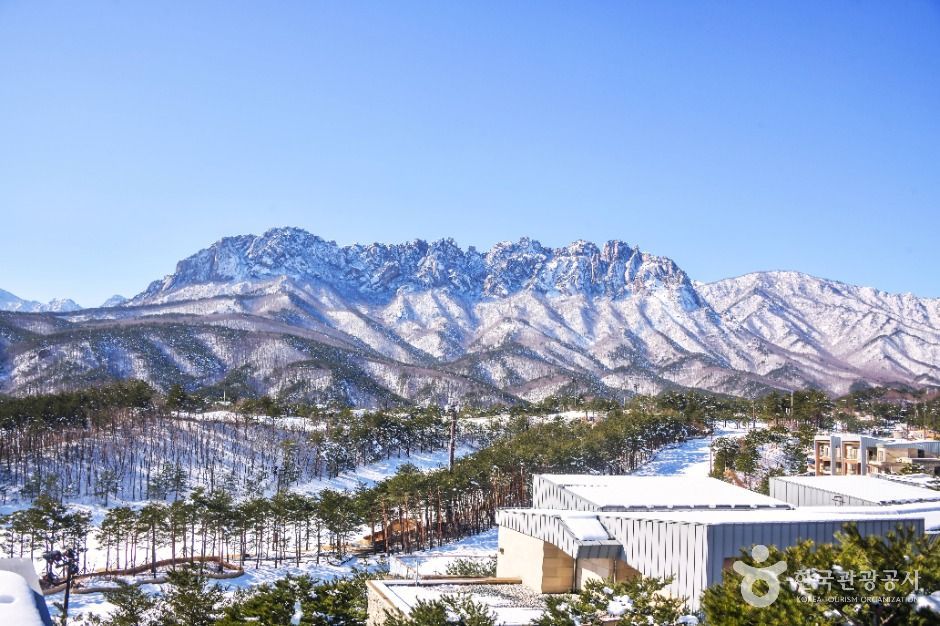 Photo: © 한국관광공사 (Korea Tourism Organization)
In winter, the course name matters less than the full set of conditions: trail surface, official controls, wind, perceived temperature, descent time, and return transportation.
KNPS guidance on heavy snow, cold waves, and strong winds warns that slipping, hypothermia, falling objects, and distress can become more likely.
Strong-wind guidance says to leave areas around old trees or steep slopes quickly and move to a safe place.
If signs of hypothermia appear, do not brush off dull senses or body trembling. Request help immediately.
2.1 A simple condition ladder: low burden, caution, stop
A lower-burden day is one where you have checked official controls and weather, snow or ice is absent or very limited, and you can descend on designated trails in daylight.
A caution day is one where the path may look fine in photos, but shaded ice, packed snow, frozen stairs, strong wind, short daylight, and slow descent start to overlap.
A stop day is one with official controls, worsening snow, wind, or visibility, heavy-snow, cold-wave, or strong-wind advisories, a late start, poorly fitting crampons, or uncertainty about the descent bus.
By KoreaPeak’s standard, a successful winter plan is not “I failed if I did not reach the summit.” It is “I turned back when the upper section or descent became unstable.”
2.2 How to think about winter traction gear
Treat winter gear as part of one safety bundle: crampons or microspikes, gaiters, designated trails, postponing when weather worsens, and cooperating with on-site controls.
On winter national-park trails, prepare winter gear such as crampons and gaiters and stay on designated trails. Even then, do not become overconfident on shaded ice, in strong wind, or during a rushed descent.
This guide does not make a product-type claim. It uses the KNPS terms for crampons and gaiters as names for winter equipment you must prepare before you leave.
If official controls, advisories, upper-section ice, wind, or slow-descent risk become serious, do not treat the day as something you can solve by adding more gear. Lower the hiking goal.
| Situation | KoreaPeak judgment | Why |
|---|---|---|
| Dry trail, no control | You may be able to start with a lower burden | Weather and controls come first |
| Packed snow and shaded ice | Prepare hiking traction | KNPS winter gear guidance includes crampons |
| Steep ice, strong wind, late timing | Stop or turn back | Slipping, hypothermia, falling objects, and distress risks increase |
2.3 Where foreign hikers often get stuck
The first trap is underestimating a trail because “there does not seem to be much snow in the photo,” while one shaded section is frozen.
The second is not recognizing Korean terms on official pages, including crampons, gaiters, trail control, and entry time.
The third is forgetting to check transportation, fare and payment, controls, and weather again before departure. Use the Sokcho BIS route map, Sokcho BIS fares, national-park control status, and national-park weather.
This is not about installing more apps. It is about choosing the official checkpoints before you need them.
3. Where to go without a car: Seoraksan Sogongwon and Ulsanbawi example
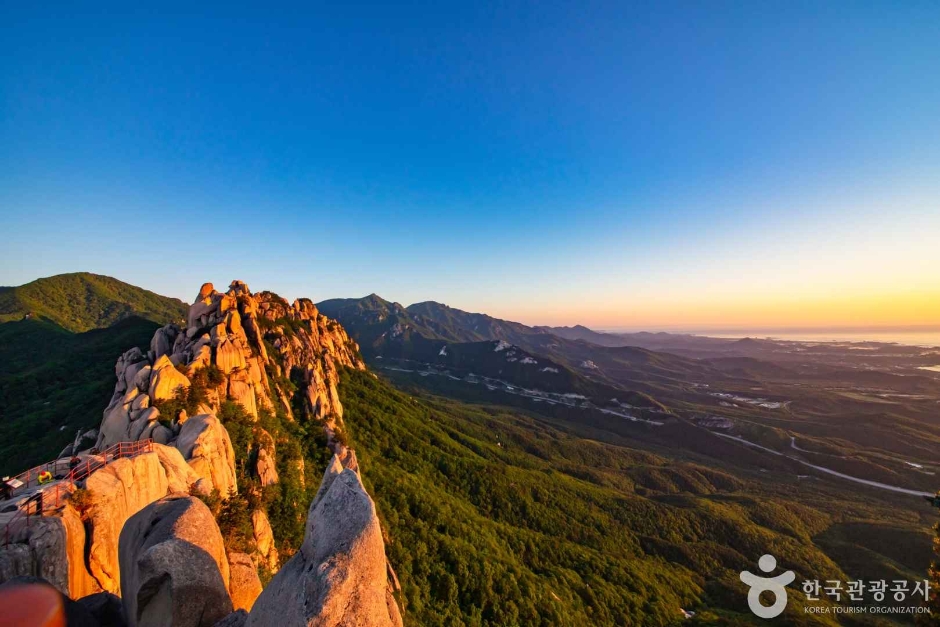 Photo: © 한국관광공사 (Korea Tourism Organization)
The route example in this guide is an out-and-back plan. It starts at Seoraksan Sogongwon / Seoraksan Park main entrance, goes toward the Ulsanbawi viewpoint or a decision point before the upper section, and returns to the same Sogongwon area.
The plan assumes a Sokcho terminal-area lodging or transport base. After descending, you return toward Sokcho from the Seoraksan Sogongwon stop by bus 7 or 7-1.
The official Ulsanbawi course material gives the Sogongwon-Shinheungsa-Heundeulbawi and Gyejoam-Ulsanbawi route as 3.8 km, about 2 hours, and medium difficulty.
That number is fair-weather official course information. In winter, you must separately allow for upper stairs, shaded ice, wind, and a slower descent.
3.1 Why base the plan around Sokcho?
The KNPS Seoraksan transportation guide describes an approach from Seoul Gangnam Express Bus Terminal to Sokcho Express Bus Terminal, then city bus 7 or 7-1 to the Sogongwon parking lot, followed by a 3-minute walk.
It also lists an approach from Dong Seoul Terminal to Sokcho Intercity Bus Terminal, then a connection by bus 7 or 7-1.
This guide has not verified first and last Seoul-departure buses for a same-day round trip, so it does not promise a Seoul day trip. It explains the lower-friction plan based on Sokcho.
In winter hiking, risk rises the moment getting home becomes harder than the hike itself. Keeping your lodging or terminal base in Sokcho makes the plan less fragile.
3.2 Start point and end point
Set the start point as Seoraksan Sogongwon / Seoraksan Park main entrance / Ulsanbawi trailhead.
The end point is the same Seoraksan Sogongwon. The route type is out-and-back.
Even when the start and end point are the same, you need a separate plan for the post-descent return. In this example, that means taking bus 7 or 7-1 from the Seoraksan Sogongwon stop toward Sokcho.
As of the 2026-07-15 check, the combined official weekday table for buses 7 and 7-1 from the Seoraksan Sogongwon starting point in Sokcho BIS timetable downloads shows headways of about 17-60 minutes. The latest listed departure is Gangwon 7-1 at 20:35.
The official Sokcho BIS route map verifies that buses 7 and 7-1 connect the Gosok Bus Terminal stop area and Seoraksan Sogongwon. It does not verify the exact passing time at the Gosok Bus Terminal stop, so do not use it as an exact first-bus or last-bus time for that stop.
3.3 Treat the upper section as a decision point, not the prize
In the Ulsanbawi example, the winter section to judge most conservatively is the upper climb after Heundeulbawi and Gyejoam toward the Ulsanbawi viewpoint or turn-back point, plus the descent from there.
Upper stairs, shaded ice, wind, and a slow descent are the caution factors for this section. The exact gradient, exposure grade, and number of stairs are not published by the park service.
That means the official “medium difficulty” grade should not be read as “easy in winter.”
If wind, ice, fatigue, poor crampon fit, and late timing overlap in the upper section, safe descent comes before the Ulsanbawi viewpoint.
4. What do you need to reserve or check?
For winter hiking in Korean national parks, “reservation” is not only about lodging and transportation. It can also involve entry times, trail controls, protected-section reservations, and shelter check-in times.
KNPS explains that it operates entry and control times by trail, taking the destination, distance, and required time into account.
The Seoraksan entry-time change notice says it applies from 2026-07-11 and is operated for trail safety and resource protection in Seoraksan National Park.
Unauthorized entry during control time is announced as subject to administrative fines: 200,000 won for the first violation, 300,000 won for the second, and 500,000 won for the third.
4.1 Official checks come before nonrefundable bookings
Even if you book transportation and lodging, keep the final hiking decision open until after the official checks on the previous night and the morning of the hike.
Before departure, check current controls and weather again at national-park control status, Seoraksan control detail, and national-park weather.
Seoraksan trails may be controlled because of heavy rain, heavy snow, typhoon advisories, forest-fire and resource-protection periods, thaw-season rockfall, disasters, maintenance, or visitor-safety needs.
Checking current status means national-park control status, Seoraksan control detail, and national-park weather take priority over this blog post. This article was checked as of 2026-07-15, but it does not replace same-day opening status.
4.2 Protected sections and shelters are separate checks
Hullyimgol is included here only as an example of a Seoraksan protected section. This guide does not recommend it as a winter beginner course.
As of the 2026-07-15 check, the national-park reservation system lists Hullyimgol as a one-way 3.1 km, 2-hour-30-minute course from Hullyimgol Visitor Support Center to Yongso Falls Samgeori.
The reservation system lists Hullyimgol reservation operation as October-November and ordinary non-reservation operation as January-September and December. It also says thaw-season control is announced separately and the operating period may change according to on-site conditions.
Hullyimgol reservations are guided as closing at 14:00 on the day before the visit. If you are considering that section, check Hullyimgol reservation and operation guidance.
Shelter reservation holders may receive some extension of entry control time, but winter shelter check-in is 15:00-18:00. You still have to plan around entry and control times.
4.3 Costs and facilities do not replace safety
Seoraksan accommodation-facility fees and cable-car information are not the core of winter hiking safety.
As of the 2026-07-15 check, Seorakdong campground auto-camping is guided as 20,000 won on weekdays and 30,000 won on weekends and peak season for one night and one site.
Seoraksan shelters are guided as 20,000 won on weekdays and 30,000 won on weekends and peak season for independent and partition-type use.
Seoraksan cable-car fees are guided as being collected by Seorak Cable Car Co., Ltd., not by the national park. Do not simplify the cable car into a winter hiking safety alternative.
5. One-day plan: from the night before to the descent bus
A workable winter hiking plan has a sequence: previous-night check, morning check, gear-fit check, early start, turn-back criteria, and a target for the descent bus.
The Sokcho terminal-area example uses a planning estimate of about 5 hours 30 minutes, excluding meal and photo time.
That estimate combines a 5-minute walk, about a 40-minute bus ride, about 4 hours 20 minutes of round-trip hiking at winter pace, and about a 45-minute return bus. It is not a guaranteed timetable.
In winter, allow much more time than the official 2-hour course description for descent delays, rest, gear adjustment, photo congestion, and bus waiting.
5.1 Checks on the previous night and the same-day morning
On the previous night, open national-park weather, national-park control status, and Seoraksan control detail to check current status.
On the morning of the hike, open the same official pages again. Build the heavy-snow, cold-wave, and strong-wind guidance, plus cooperation with on-site controls, into your plan.
Check the Ulsanbawi course itself on the KNPS Ulsanbawi course page/API, but do not treat this article as a substitute for that page’s same-day opening status.
Check entry times and the control system at the KNPS entry-time overview and the Seoraksan entry-time notice.
5.2 Preparations and Korean terms
Basic preparations include crampons or another traction device, gaiters, several thin layers, a spare battery, a transportation card, and a small amount of cash.
KNPS winter guidance says to prepare winter gear such as crampons and gaiters and use only designated trails.
Sokcho BIS fare guidance lists the Sokcho-Sokcho adult city-bus fare as 1,700 won in cash and 1,530 won by card. It also includes T-money among prepaid cards.
Foreign-issued cards may not work on local buses, so prepare both a transportation card and a small amount of cash.
5.3 Set turn-back criteria before departure
Write your turn-back rule as “I descend while I still have time and transportation to get home,” not “I will be disappointed if I miss the summit photo.”
In the Ulsanbawi example, the upper section after Heundeulbawi and Gyejoam, and the descent from it, are the main winter decision points.
Start descending if snow begins, wind strengthens, your feet slide on shaded ice, your crampons wobble on your shoes, or your return-bus target starts to collapse.
If there is on-site control or an instruction from a park manager, follow that control, not your personal schedule.
6. How do you get back after descending?
A winter hiking plan needs to close the post-descent return before it worries about the summit or viewpoint.
Because the Ulsanbawi example returns to the same Sogongwon area, the return leg is bus 7 or 7-1 toward Sokcho from the Seoraksan Sogongwon stop.
As of the 2026-07-15 check, the combined official weekday table for buses 7 and 7-1 from the Seoraksan Sogongwon starting point in Sokcho BIS timetable downloads shows headways of about 17-60 minutes. The latest listed departure is Gangwon 7-1 at 20:35.
Because the exact passing time at the Gosok Bus Terminal stop has not been verified, check the bus 7 and 7-1 connection on the Sokcho BIS route search/map, but do not treat it as the exact first-bus or last-bus passing time at that stop.
The right winter plan is not to aim for 20:35. Aim to be back at the bus stop around 16:30-17:00 and leave several late-afternoon departures as margin.
6.1 How to check the bus return
For the return route, check buses 7 and 7-1 and the Seoraksan Sogongwon stop on Sokcho BIS route search/map. Check the timetable again before departure through Sokcho BIS timetable downloads.
For fares and payment, check the current guidance on the Sokcho BIS fare page.
Because the exact passing time at the Gosok Bus Terminal stop is not published, leave a large margin for reaching stops both when you depart and when you return.
The bus is the basic return plan. Do not put an unverified taxi rescue at the center of your safety plan.
6.2 Why this guide avoids promising a Seoul day trip
The KNPS transportation guide explains the main access axes from Seoul terminals toward Sokcho, Yangyang, Osaek, and Sogongwon.
This guide has not verified Seoul-Sokcho first and last buses and Seoraksan Sogongwon bus passing times as one guaranteed same-day round-trip table.
For foreign readers, “close the descent and return based on Sokcho” is more conservative than “a Seoul day trip is always possible.”
Long-distance Seoraksan goals such as Daecheongbong, Hangyeryeong, Baekdamsa, and Gongnyongneungseon have separate issues: time, controls, shelters, and descent transportation. Do not group them at the same difficulty level as this Ulsanbawi example.
7. Where to check current status before departure
This guide is remotely verified as of 2026-07-15. For same-day status, national-park control status, Seoraksan control detail, and national-park weather take priority.
Before departure, check current controls at All national parks trail-control status and Seoraksan current trail-control detail.
Check current weather at KNPS national-park weather forecast and observations.
Check winter gear and weather-risk action rules at KNPS winter safety / crampons / cold-wave guidance and KNPS heavy-snow / cold-wave / strong-wind advisory guidance.
Check Seoraksan entry time at the KNPS entry-time overview and Seoraksan entry-time/cutoff notice.
Check Ulsanbawi course information at the KNPS Ulsanbawi course page/API.
Check Seoraksan access transportation through Seoraksan official transit directions and Sokcho BIS route search/map.
Check the Seoraksan Sogongwon return timetable through Sokcho BIS official route timetable downloads.
Check bus fares at Sokcho BIS official fare page.
If you are separately reviewing Hullyimgol or a shelter, check Hullyimgol reservation/operation/current rules and KNPS reservation system home/current notices.
8. Final judgment: turning back matters more than crampons
For winter hiking in Korea, crampons are not a departure ticket. They are gear that can lower one part of the risk.
For foreign hikers, the bigger plan is this: reach the trail without a car, stay on designated trails, check official controls and weather, set turn-back rules for the upper and descent sections before you start, and leave enough margin to get back by bus.
The Seoraksan Sogongwon and Ulsanbawi example is a conservative planning pattern. If same-day controls or weather are unfavorable, descent and return come before the viewpoint.
KoreaPeak’s conclusion is simple: prepare hiking traction that fits your actual shoes, check the official links on the previous night and the morning of the hike, and treat “I turned back” not as failure, but as the decision that got the winter day home safely.